


2 Truths and 1 Lie
3.82.00 Reviews
App Specs
- Version
- 1.0.5
- Updated On
- License
- Free
- Downloads
- 10,000+
- Developer
- Vanilla b.v.
- Categories
- Trivia
- Platform
- Android
Screenshots
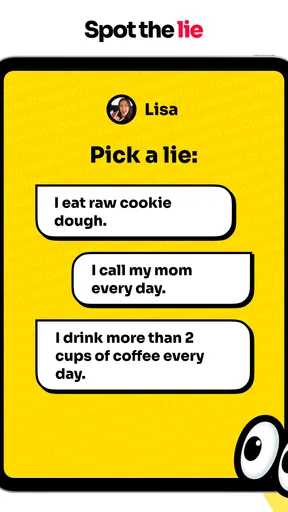
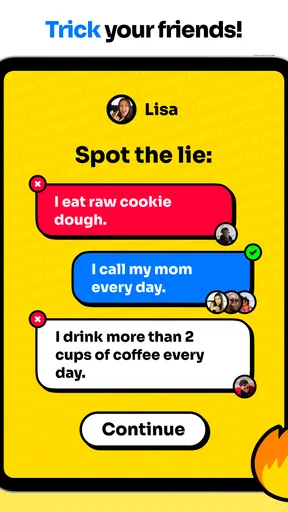
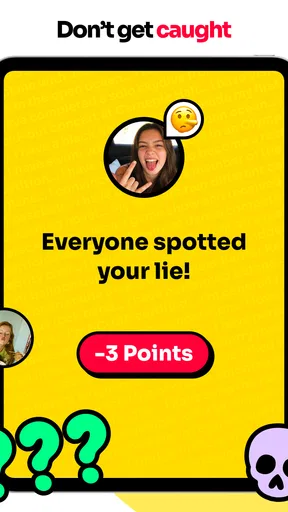
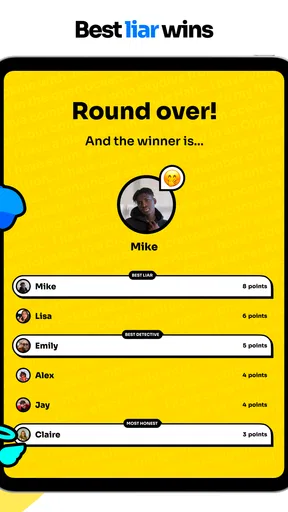
 Analysis by AppCompare
I tend to enjoy trivia games most when they give people a reason to talk, not just tap through questions. 2 Truths and 1 Lie is built around that social instinct: someone shares three statements, the group decides which one is false, and the reveal gives everyone a fresh opening for conversation. That makes it a better fit for a sofa, a lunch break, or a video call with friends than for a quiet solo session. I’d think of it as a small icebreaker that happens to live on your phone, rather than a deep trivia challenge.
The game is free to start, developed by Vanilla b.v., and sits in the trivia category. It has a 3.8 average from around 38 ratings, with over 10,000 installs, so it has attracted a modest audience rather than becoming a household name. It is rated Teen, and the current version is 1.0.5, released in July 2024. Those details set expectations: this is a relatively new, casual party game, not a long-running quiz platform with a huge community behind it.
Getting Started with 2 Truths and 1 Lie
First things first, downloading and setting up 2 Truths and 1 Lie couldn’t be simpler. Available on both Android and iOS, it’s just a quick download away from your favorite app store. Once you’ve got it installed, the app greets you with a vibrant and intuitive interface that makes navigation a breeze. You’ll immediately feel like you’re ready to dive into the fun.
The First Move: Make the Statements Believable
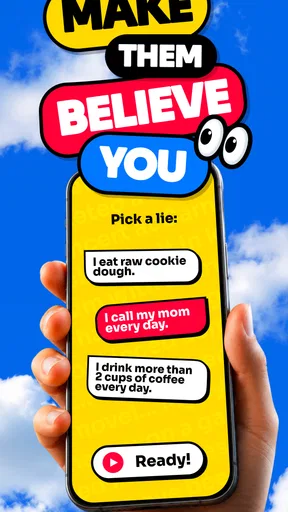
The most important part of a round is not choosing a clever lie; it is making all three statements sound plausible enough to start a discussion. If one claim is obviously exaggerated, the guessing is over before the game has a chance to become social. I’d keep the truths specific and the lie close to something that could reasonably have happened. That small adjustment gives friends more to debate and makes the reveal more satisfying.
For a first round with people who do not know one another well, I would keep the statements light: a harmless travel mishap, an unusual food preference, or a skill someone has tried to learn. With close friends, details can be more personal, but the game works best when nobody feels pushed to disclose something private. It is an icebreaker, not a test of how much someone is willing to reveal.
How the Feedback Keeps a Round Moving
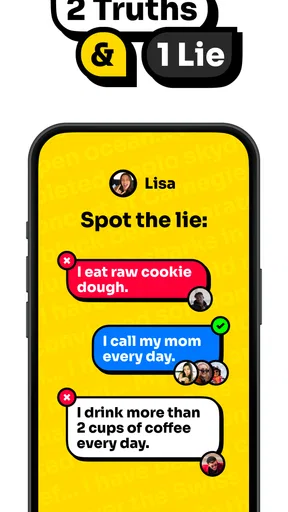
Let’s dive into the core of the app—the gameplay. The rules remain true to the classic game: you share two truths and one lie, and the other players have to guess which one is the fib. But what sets this app apart is its interactive features. You can play with friends in person or connect with them online, making it perfect for both social gatherings and virtual hangouts.
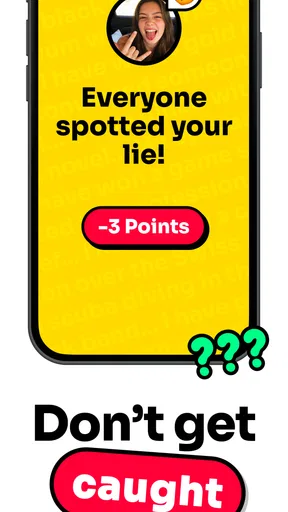
Each guess naturally creates a little feedback loop: players explain what made a statement convincing, the speaker responds, and the answer changes how the group reads the next set. That social reaction is the real payoff. I would not treat a wrong guess as a failure; it often gives the speaker a chance to tell the story behind a true statement, which can be more entertaining than simply getting the answer right.
Worth Reading Before You Choose

Flipboard Shows What News Apps Must Do Beyond the Feed

Switching to Android Auto Means Rethinking Your Driving Routine

Google Calendar Makes a Crowded Week Easier to Manage

Ludo King Makes the Most of the Minutes Between Plans

Baby Panda World Brings Quick Play to Modern Phones, but Its Game Library Feels Busy

ESPN’s Live Game View Makes Following Close Games Easier
The app offers various themed categories, which add a layer of strategy and fun. Whether you’re into sports, music, or travel, there’s something for everyone. Plus, the ability to create custom categories means the possibilities are endless. It’s a blast to see how well your friends know you—or don’t!
For a smoother group session, I’d agree on a theme before people start making statements, especially if the group has mixed interests. A broad prompt can leave quieter players unsure what to share, while a narrow one gives everyone a clear starting point. Custom categories are most useful when they reflect the people in the room—shared hobbies or a recent trip, for example—rather than being so specific that only one person can participate.
What the Reward Really Is
This is not the sort of trivia game where I would expect a long progression of facts to memorize. The reward is the moment a convincing lie fools the group, or a surprising truth turns into a story. That makes it especially handy when friends have a few spare minutes but do not want to commit to a full board game. A round can be a conversation starter, and the discussion can continue after the phone is put down.
Compared with a standard multiple-choice quiz, the game gives players more room to shape the entertainment themselves. A conventional quiz is the better option when you want factual questions, clear right-or-wrong scoring, and a focused solo challenge. This format is stronger when the group’s reactions matter more than a knowledge score. The trade-off is that its fun depends on people being willing to participate; it cannot manufacture lively stories from a quiet or distracted group.
Design and Usability
I was pleasantly surprised by the sleek design of 2 Truths and 1 Lie. The developers have clearly put a lot of thought into making the user interface appealing and easy to navigate. The vibrant colors and playful animations make the experience engaging without being overwhelming. Even if you’re not tech-savvy, you’ll find it easy to get the hang of it in no time.
Another highlight is how smooth the app runs. I didn’t experience any lags or crashes, which is often a concern with new apps. The developers have done a fantastic job ensuring a seamless experience, which enhances the overall enjoyment of the game.
For an everyday test, imagine a few friends waiting for food at a casual get-together. Instead of everyone scrolling separately, one person can suggest a quick round and choose a topic the whole table can answer. If the first statements fall flat, the group can switch to a shared experience or a lighter theme rather than forcing the same prompt. That flexibility matters more than elaborate rules: the best round is usually the one that fits the people present.
I would also set a gentle boundary before playing with colleagues or newer acquaintances: keep statements comfortable to share in that company. A prompt about travel or hobbies can work across a mixed group, while questions that invite secrets or sensitive personal details can turn an easy icebreaker into an awkward moment. The game does not decide what is appropriate for a group; the host should make that call.
When the Session Needs a Reset
A good time to stop is when players start repeating the same kinds of statements or when guesses become automatic. Rather than stretching a session until everyone loses interest, I’d pause and return later with a new group, a fresh topic, or a different mix of players. The format relies on surprise, so a short break can do more for replay value than trying to squeeze out another round immediately.
That reset also helps answer a practical question: is this worth keeping for occasional use or daily play? I see it as an occasional social tool. If you regularly meet friends online or in person and like learning small, unexpected things about one another, it can earn a place on your phone. If you want a solo game with a steady stream of factual challenges, a conventional trivia app is likely a better match.
Community and Social Features
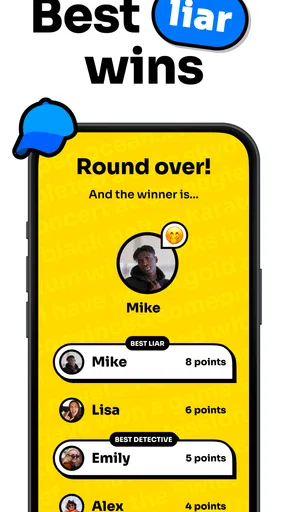
What’s a game without some friendly competition? 2 Truths and 1 Lie offers a leaderboard feature, allowing you to compare your scores with friends and players worldwide. It’s a great way to keep the game lively and competitive. Plus, the in-app chat feature lets you banter with your opponents, adding a personal touch to the virtual experience.
For those who like to keep things private, the app also offers options to play anonymously or within closed groups. It’s a thoughtful addition that ensures everyone can enjoy the game in their preferred manner.
Those social options make the game easier to consider for different kinds of gatherings, but they do not change the basic requirement: people need to bring statements and reactions of their own. If your group prefers not to compete, the conversation can still be the point; if everyone is focused on rankings, the leaderboard may add a reason to keep guessing. I would choose the tone before starting, so the score does not overshadow the stories.
There is also a small cost question to keep in mind. The game is free, while optional in-app purchases range from about five to ten dollars per item. I would try the free experience with the group first and only consider spending if the app already fits how you play. For an occasional icebreaker, paying is not essential to the basic appeal; for someone who expects regular use, it is worth deciding whether any extra purchase genuinely improves their sessions.
Who Will Enjoy It—and Who May Not
I’d recommend it to people who like party games that make conversation easier, especially small groups of friends, families with teens, or online friends looking for something more personal than a rapid-fire quiz. Its Teen age rating is worth noting if you are choosing a game for younger players, and adults should still tailor prompts to the group. The app is less compelling for someone who wants to play alone, learn a structured set of facts, or compete in a trivia format where knowledge is the main skill.
It may also be a poor fit for a group where only one or two people are comfortable speaking up. In that case, a turn-based board game or a quiz with direct questions can give everyone a clearer role. Here, the quality of a round depends on each person finding something they are willing to share, and that social demand is both the game’s distinctive strength and its main limitation.
Why You Should Try It
Overall, 2 Truths and 1 Lie is a fantastic app that brings a fresh twist to a classic game. Whether you’re looking to break the ice at a party or just pass the time with friends, this app delivers on all fronts. Its versatility, combined with a user-friendly interface and engaging features, makes it a standout choice in the world of mobile gaming.
So, if you’re ready to test your friends' knowledge and maybe learn a thing or two about them, give 2 Truths and 1 Lie a try. It’s free, fun, and guaranteed to keep you entertained for hours. Just remember, the truth might be stranger than fiction!
My Verdict on the Loop
The action is simple: offer three statements, listen to the guesses, and enjoy the reveal. The feedback comes from the group rather than from a complicated scoring system, while the reward is a story or a laugh that gives people a reason to start another round. When that conversation is flowing, this is a pleasantly low-pressure way to keep it going. When the group wants deep solo trivia, firm factual answers, or a game that entertains without social effort, I’d choose something else.
For me, the best reason to keep it installed is having a ready-made activity for those small gaps when people are together but nobody knows what to do next. I would start with a familiar topic, keep the statements comfortable, and stop while the group still wants another turn. That is where this game works best: not as an endless challenge, but as a quick prompt that turns a few minutes into a better conversation.
Pros
- Engaging and fun gameplay.
- Simple rules
- easy to learn.
- Great for group activities.
- Boosts creative thinking.
- Encourages social interaction.
Cons
- Limited single-player mode.
- Premium features are costly.
- Requires internet connection.
- Ads can be intrusive.
- Limited customization options.
FAQs for 2 Truths and 1 Lie
What is 2 Truths and 1 Lie and how does it work?
2 Truths and 1 Lie is a social game where players share two truths and one lie about themselves, and others must guess which statement is false. The app facilitates this fun activity by offering a platform to play with friends or random users online, providing prompts to keep the game engaging and interactive.
Is 2 Truths and 1 Lie suitable for all ages?
While 2 Truths and 1 Lie is generally suitable for all age groups, it's important for parents to supervise younger players. The nature of the game involves sharing personal information, so ensuring a safe and appropriate environment is key. The app also includes filters to block inappropriate content.
Does the app require an internet connection to play?
Yes, 2 Truths and 1 Lie requires an internet connection to play with others online. However, there is an offline mode available where users can play with friends or family in the same room. This flexibility makes the app versatile for different situations.
Are there any in-app purchases or ads in 2 Truths and 1 Lie?
The app is free to download, but it includes optional in-app purchases for additional features and customization options. It also contains ads, which can be removed by purchasing a premium version. These options allow users to enhance their gaming experience according to their preferences.
How can I ensure my privacy while using 2 Truths and 1 Lie?
The app prioritizes user privacy by offering privacy settings where players can control who sees their information. Users can choose to play only with friends or keep their profiles private. It's recommended to review these settings and adjust them according to your comfort level before starting the game.


